
Preparing artwork for a private-label pack
Cartons, labels and leaflets are where a formula meets the shelf. A few decisions made early save a reprint later.
 MAS Pharma team
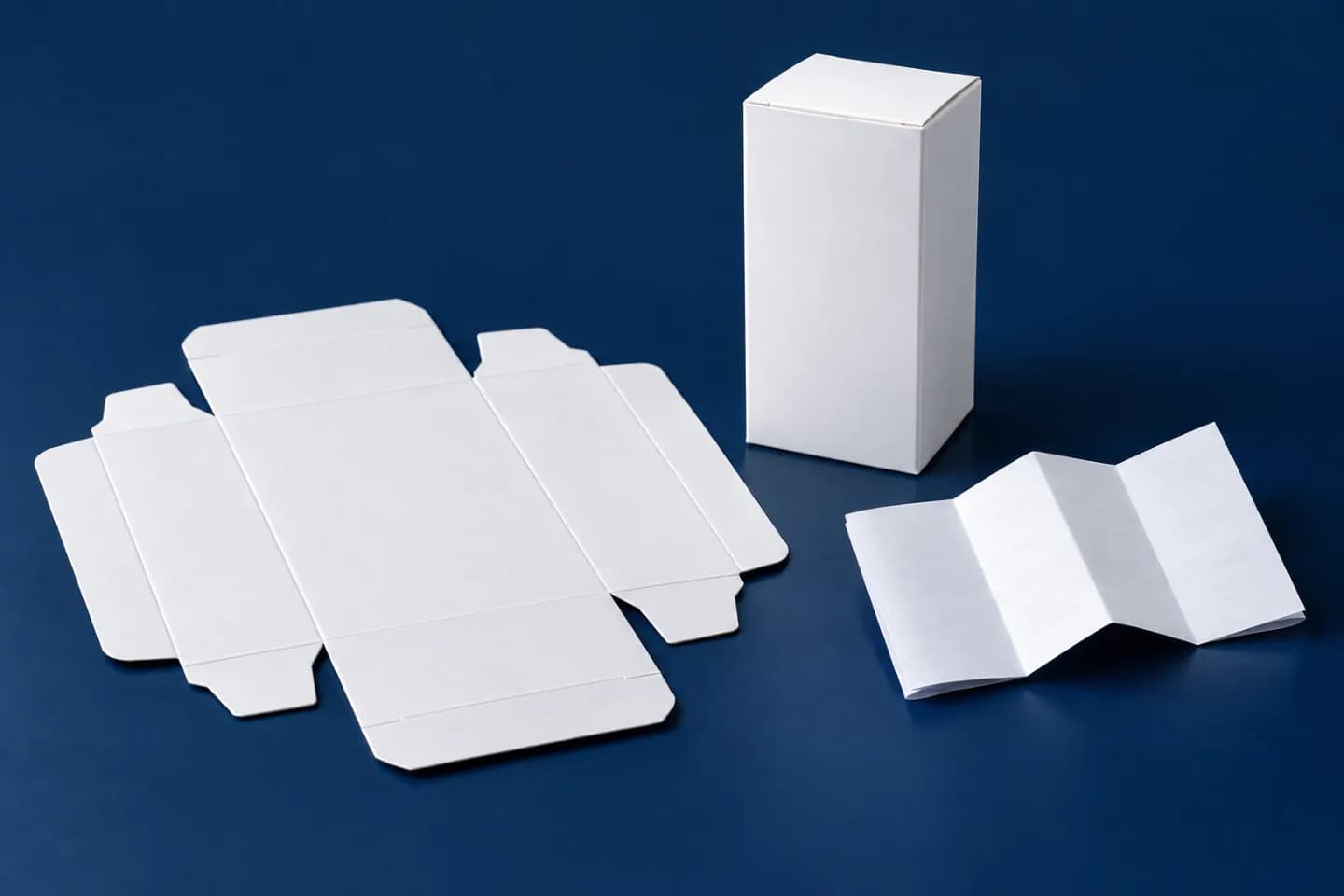
Your artwork is printed and packed on our lines, so it has to fit the pack exactly and carry everything the market requires. This is what we check before anything goes to print.
Design on the dieline
Every carton and label has a dieline: the flat template with its cut, fold and glue lines. Ask for the dieline of your exact pack and design on it, so each panel lands where it folds and nothing important sits on a glue flap.
What the pack has to say
- Product name and form, for example syrup or effervescent tablets.
- Full composition, matching the approved formula word for word.
- Directions for use, warnings and storage conditions.
- Net quantity, batch number and expiry date.
- Who made it and who markets it.
Many markets also want this text in their own language as well as English. Check the label rules of the market before the layout is final, not after.
Leave room for batch and expiry
Batch number and expiry date are printed on the line at packing time. Keep a clear, unvarnished area for them on the carton and label.
Barcodes
Barcode numbers are registered by the brand owner with GS1 in their country. Print dark bars on a light ground, at full size, and test a printed proof with a scanner.
Files we need
- Print-ready PDF, with fonts outlined.
- CMYK colour, with any spot colours named.
- 3 mm bleed on every edge.
- Images at 300 dpi at final size.
- The dieline on its own layer.
Approve the proof
Before printing, you approve a final proof. Read the composition against the formula once more: where the product is registered, the authority compares the two.
Starting a pack design? Ask us for the dieline of the format you have in mind.
Keep reading
 Private labelHow a private-label order runs, from brief to batchSeven stages sit between an idea for a product and cartons ready to ship. What happens at each one, what we need from you, and where the time really goes.
 RegistrationWhat goes into a registration dossierBefore a supplement or cosmetic can be sold in many markets, an authority reviews a file describing exactly what it is and how it is made. These are the documents that file is built from.